
I Needed a Weather Analyst for My Farm… So I Built One With AI
The Quick Version:
By collecting daily weather data from my fish farm and analyzing it with AI, I built a farm-specific forecasting system that turns raw weather patterns into actionable operational decisions.
Running a farm teaches you a pretty simple lesson: you can control a lot of things… but the weather isn’t one of them.
If you work in agriculture or aquaculture long enough, you learn that success is often dictated by how well you respond to things that are out of your control, not just how hard you work.
For me, that lesson became especially clear while running a tropical fish farm operation. Weather factors such as temperature, UV exposure, and wind don’t just affect comfort levels—they directly impact fish health, infrastructure and most importantly, sales.
And while there are plenty of weather apps out there, I kept running into the same problem:
They weren’t built for my farm. So I did what any technology-focused farmer would do: I built my own meteorologist with AI.
The Challenge With Generic Weather Apps
Weather apps are great at telling you things like:
- Tomorrow’s forecast
- This week’s temperature
- Severe weather alerts
I have some that I highly recommend (Shadow Weather and Clime for example). But running a farm requires a much deeper different level of insight. I needed answers to operational questions like:
- When will heat stress become dangerous for my fish?
- When do evaporation rates start accelerating?
- When should I install heavier shade cloth over ponds?
- When should I remove plastic pond covers?
- When will winds start tearing shade structures apart?
- When do oxygen crashes become most likely?
A typical weather app doesn’t answer those questions. What I needed was something closer to a custom farmer’s almanac built specifically for my operation. These are the steps I took to achieve that.
Step 1: Start Collecting the Right Data
The first step was simple:
Collect weather data that actually affects the farm. The variables I cared about most were:
- Temperature
- UV index
- Wind speed
To automate this, I built a simple workflow using IFTTT that pulled weather data from a nearby Weather Underground station.
Every day at noon:
- Weather data was captured
- The data was logged automatically
- Everything was stored in a Google Sheet
No manual work required. Just clean data accumulating quietly in the background. Over time that dataset grew into something valuable. After a couple years, I had 812 daily weather records tied directly to my farm’s location.
Now things started getting interesting.
Step 2: Turn Raw Weather Data Into Operational Intelligence
Once I had enough data, I exported the spreadsheet and handed it to AI. Specifically, I prompted Perplexity to analyze the historical data and generate a weather forecast and operational planning report for the farm.
Instead of general predictions, the report focused on questions that mattered to farm operations. The result was a 2026 operational forecast built entirely from historical weather data in my farm’s locale.
If you’re down to read a 23 page PDF, you can check out the full report here.
What the Data Revealed About My Farm
Once the numbers were analyzed, some very clear patterns emerged.
The Most Dangerous Months for Fish
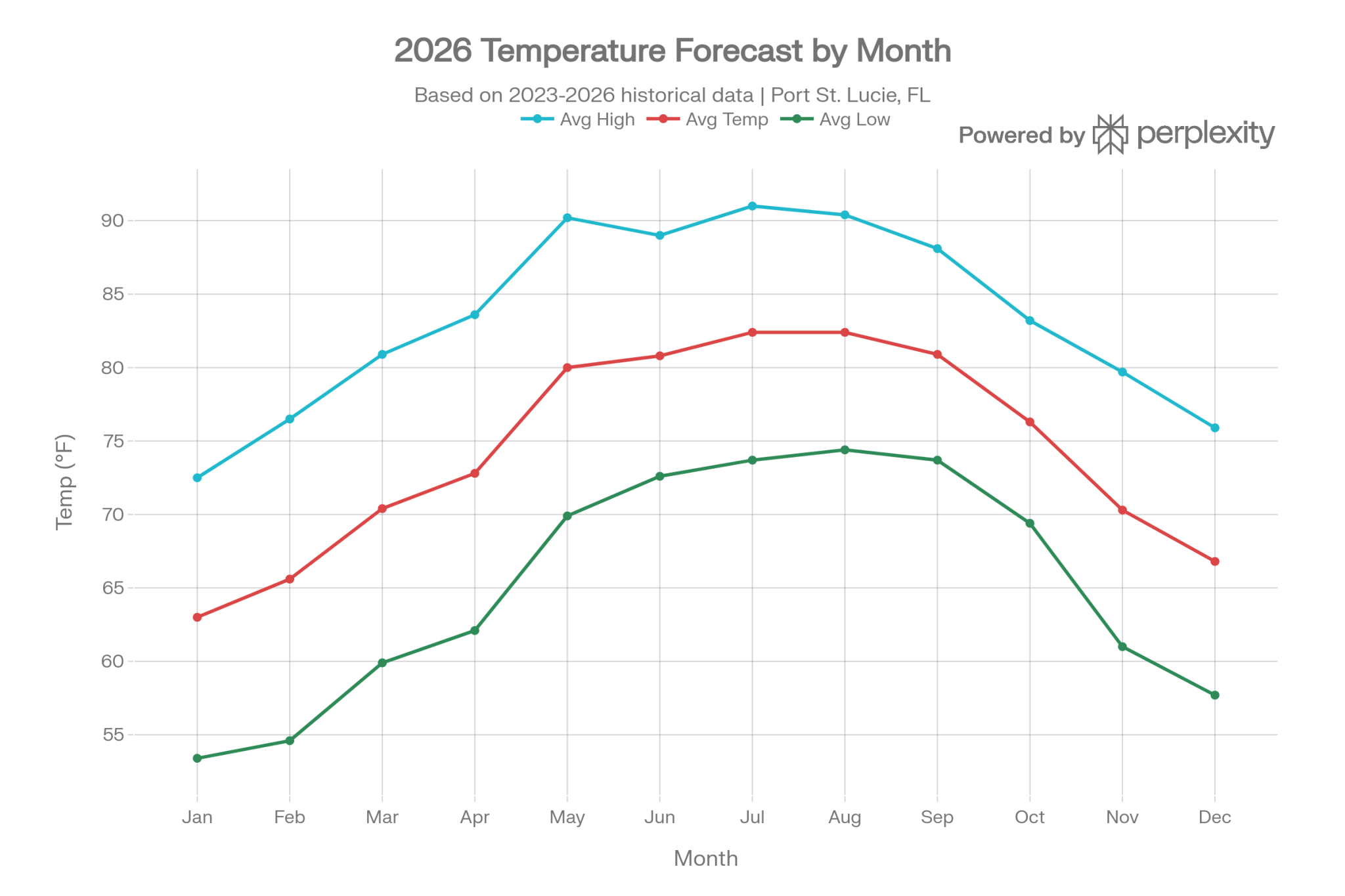
The data showed that May through August is the most critical operational period.
During these months:
- Average temperatures are extreme.
- UV exposure peaks
- Dissolved oxygen risk increases dramatically
July and August are the most extreme months, with average temperatures reaching 82.4°F (some days even peaked at 95°F). When water warms up, oxygen levels drop—while fish metabolism increases. That’s a dangerous combination.
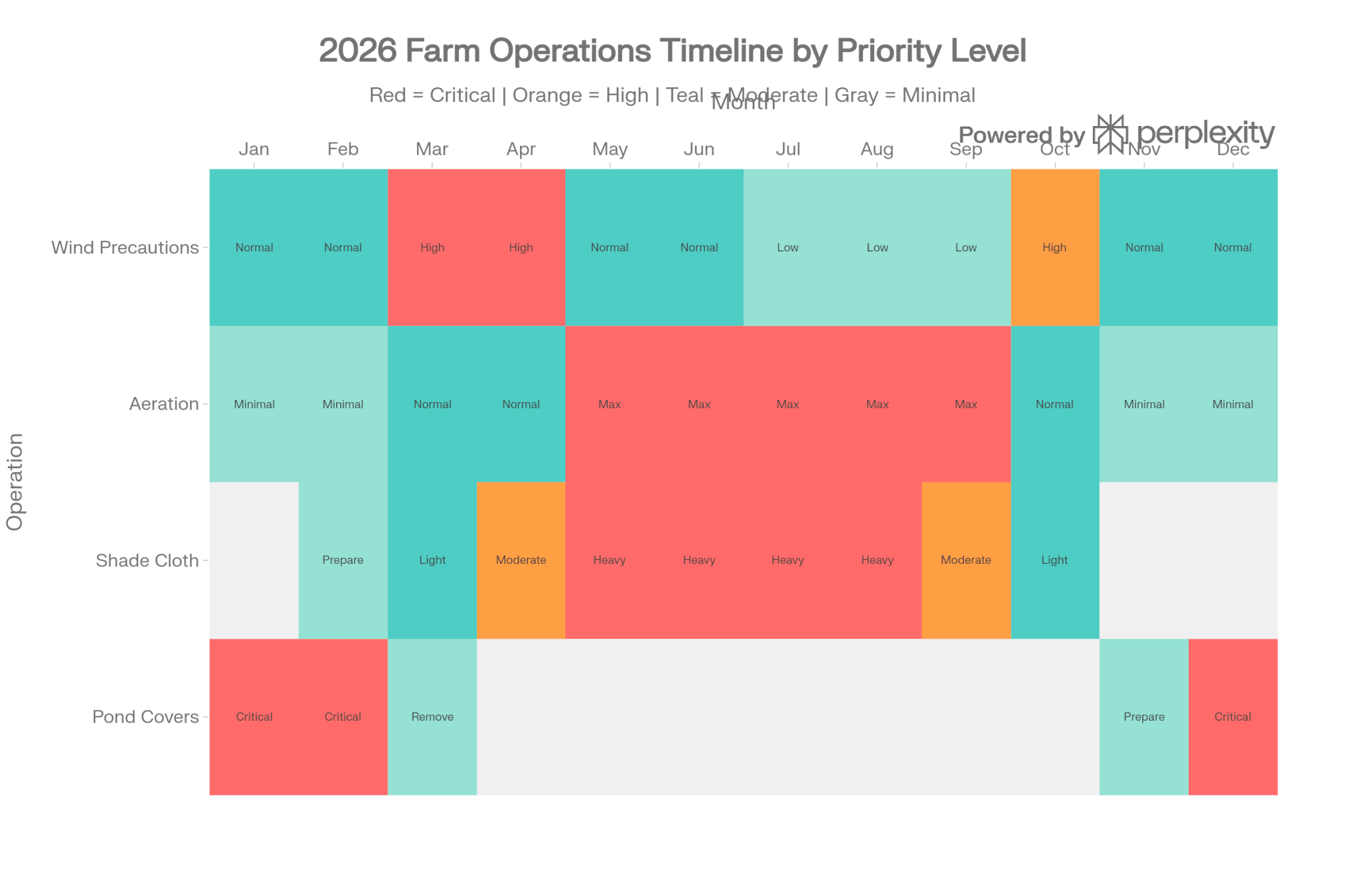
Which means aeration systems must run optimally during peak summer months.
UV Exposure Is a Bigger Problem Than You Think
Another surprising finding was how intense UV exposure becomes. The highest UV month is July, averaging a UV index of 9.7. High UV doesn’t just heat water—it also:
- Accelerates algae growth
- Increases fish stress
- Impacts immune response
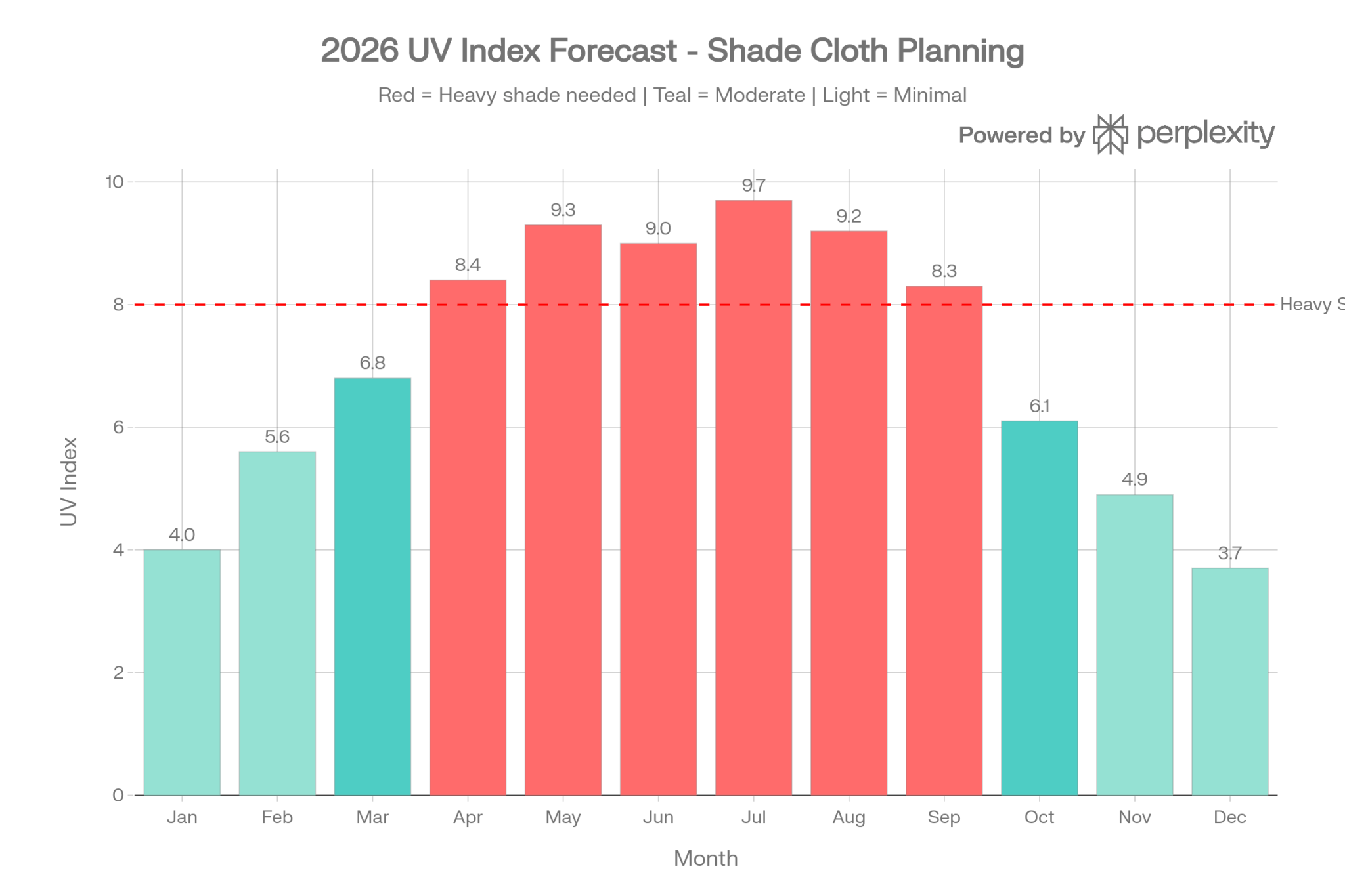
The solution? Heavier shade cloth needs to start getting installed in April and maintained through early September. Without it, fish are essentially sitting in a solar oven.
Spring Is the Windiest Season
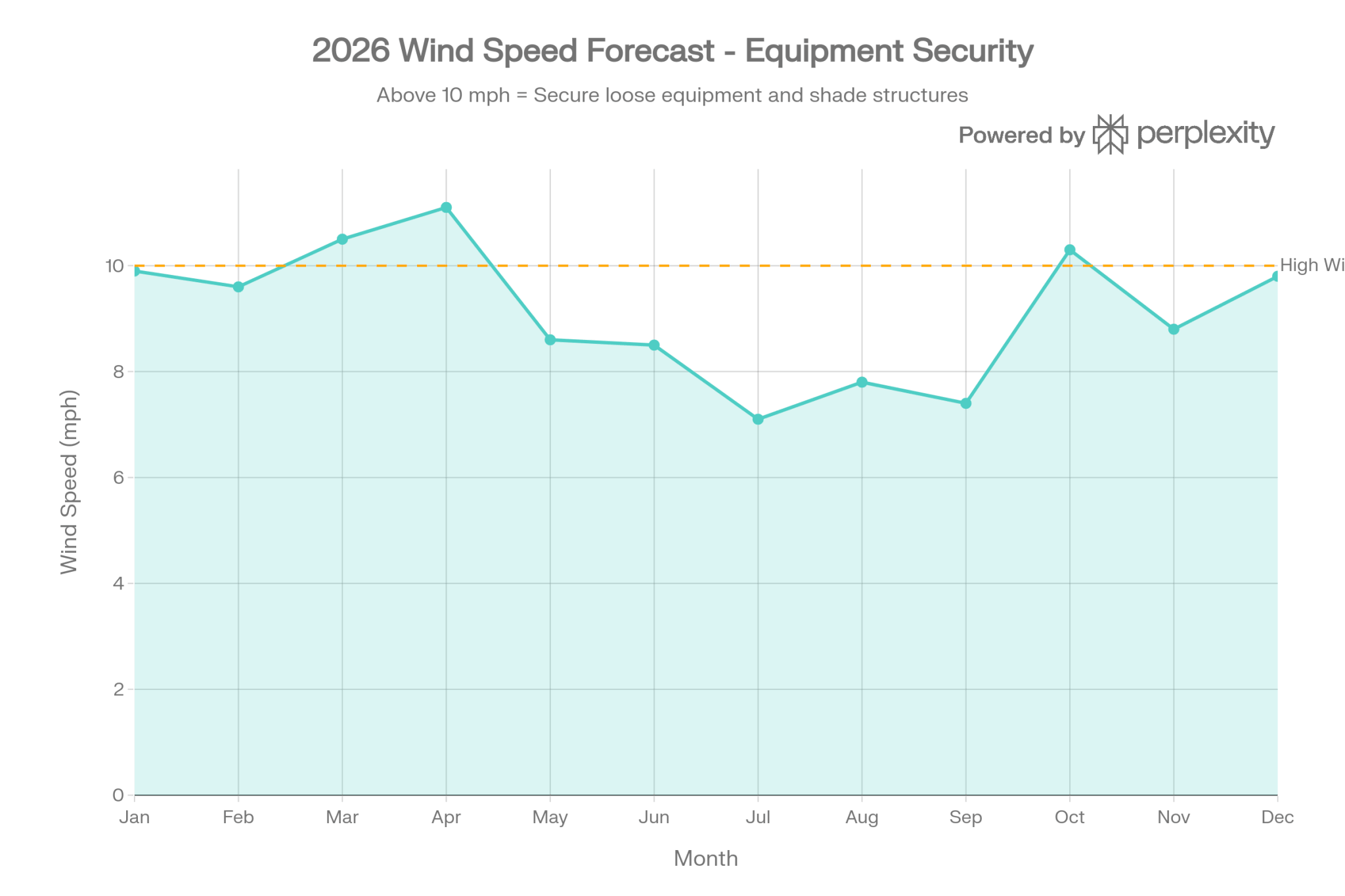
If you assumed hurricane season was the windiest part of the year, you’d be wrong (at least on my farm). The data showed the highest average wind speeds occur in March and April, reaching around 10–11 mph on average with gusts up to 21 mph. That’s right when shade structures start going up. It’s also around the time that plastic is being removed from the ponds. Plastic laying around will essentially become a 40’ x 90’ kite during that time of year.
So spring is the time to focus on:
- Reinforcing structures
- Securing equipment
- Checking attachment points on shade cloth
A small oversight here can mean repairing half the farm after a couple windy days.
Winter Isn’t Usually Too Harsh—But Fatalities Will Happen
Florida winters aren’t brutal, but tropical fish are sensitive.
January averages about 63°F, which can stress certain species. On the worst days, the temps can drop into the 20s (January 31 2026 dropped down to 26°F). The data confirmed that plastic pond covers should go up from December through February to stabilize water temperature.
Even a few degrees of retained heat can make a huge difference…especially when the sun goes down.
Why This Approach Matters
What makes this process powerful isn’t the weather data itself. It’s what happens when you combine:
- Automated data collection
- Historical pattern analysis
- AI-generated operational insights
Instead of reacting to the weather, you can plan around it months in advance. This turns raw data into something far more valuable: operational strategy.
The Bigger Lesson for Farmers (and Businesses)
You don’t need massive budgets or complicated software to do something like this. All it took was:
- One weather station
- One spreadsheet
- A simple automation
- AI analysis
From that, I was able to create a farm-specific operational forecast for the entire year. And the same concept applies to almost any operation, during any year. Whether you’re managing:
- A fish farm
- A greenhouse
- Crop production
- A construction site
- Logistics operations
Historical data + AI can turn everyday information into real decision-making tools.
What’s Next
This project started as a simple data experiment. But the more I think about it, the more possibilities I see:
- Automated farm dashboards
- AI-generated operational alerts
- Predictive maintenance scheduling
- Real-time environmental monitoring
In other words…
An operation like a farm can start making decisions before problems happen. That’s a pretty powerful advantage.
If you’re running a farm (or any weather-dependent operation) and want to explore something similar, feel free to reach out. I’d be happy to compare notes.
Wanna keep reading?